

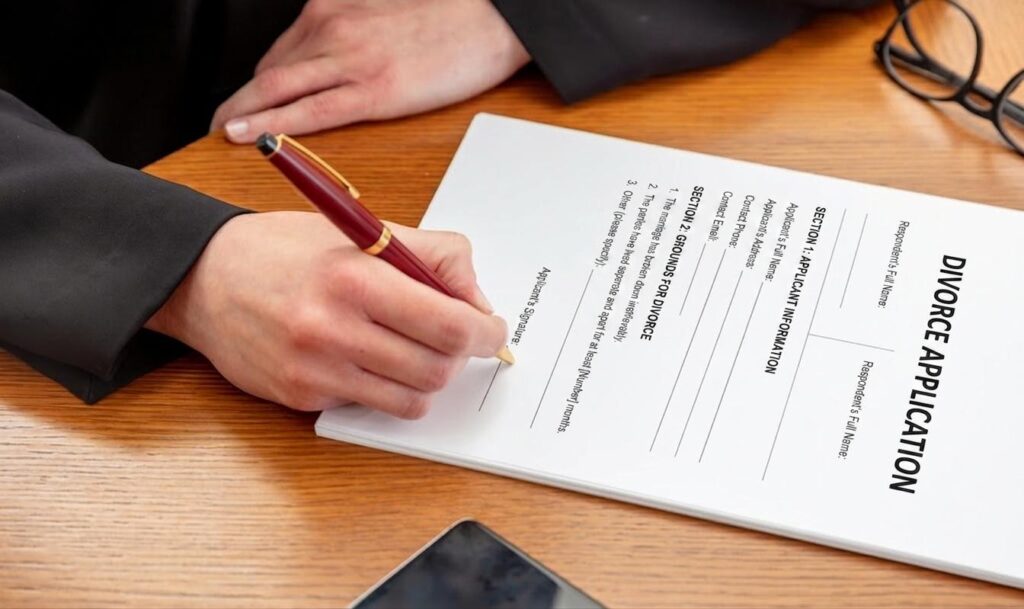
Submitting the correct divorce application form and supporting paperwork is one of the most important steps in any Australian family law matter, and getting it wrong can cost you time and money. Completing the appropriate applications correctly may help reduce delays and potentially save money. If you’re having trouble making sense of the paperwork, this guide goes through the key documentation most clients need.
Find and Download the Right Family Law Form
Skip the search, pick the form you need from the dropdown below and we’ll take you straight to the official source. Every link goes to the Federal Circuit and Family Court of Australia or Queensland Courts website.
📄 Download a Family Law Form
Select a form from the official Federal Circuit and Family Court of Australia or Queensland Courts.
Links open the official FCFCOA and Queensland Courts websites in a new tab.
Key takeaways
Filing with the Federal Circuit and Family Court of Australia (FCFCOA)
Most applications are made online through the Commonwealth Courts Portal. It’s important to ensure that all necessary supporting documents are included with the application. If they aren’t, the application may be delayed or rejected. A filing fee may be payable for certain submissions. For more on the court structure, see our overview of the Family Law Court of Australia and our guide on where to file your family law matter.
Divorce Application Form: Joint and Sole Options
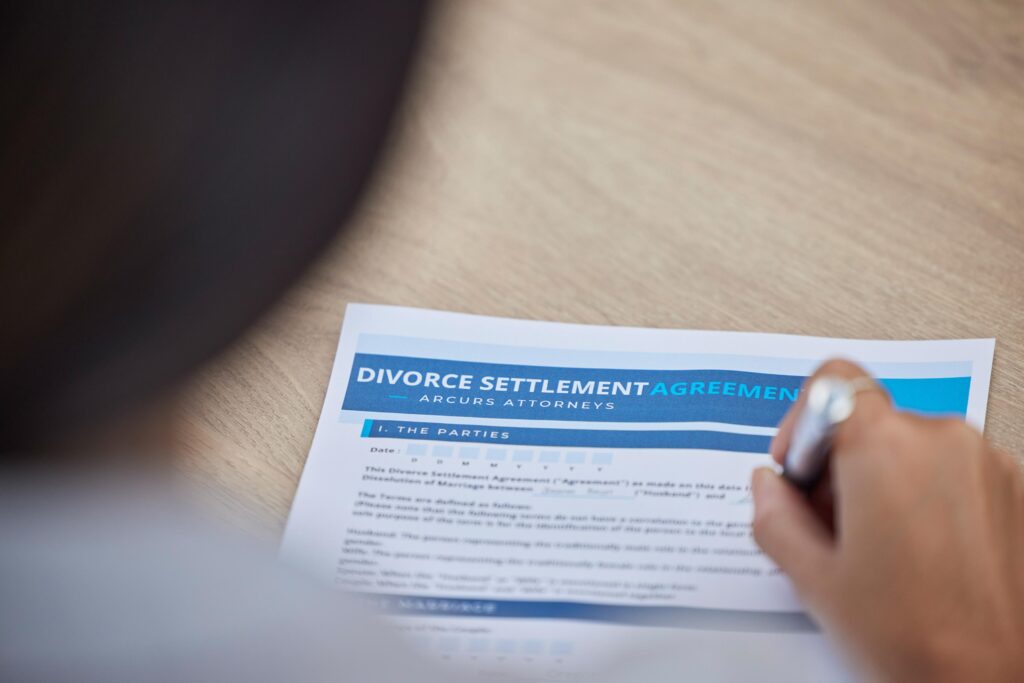
The divorce application form is filed through the Federal Circuit and Family Court of Australia and can be lodged either jointly with your spouse or as a sole applicant. Before applying, it helps to understand the difference between being legally separated vs divorced.
Joint application
Joint applications are generally the simplest way to seek a divorce. Both parties should sign the Affidavit for eFiling application (Divorce). There may be other documents required, such as:
Marriage certificate.
‘Separation under one roof’ affidavit.
Divorce applications usually cost $1125 as of 1 July 2025. Refer to the FCFCOA website for the most up-to-date information. However, parties may only have to pay a reduced fee of $375 if they meet financial hardship guidelines or hold eligible government concession cards. Couples generally need to complete a 12-month separation period before applying, see our checklist of things to consider when separating.
Sole application
Applying for a divorce alone may be a bit more complicated. The Family Law Act requires that the application be served on the other party, see our guide to serving divorce papers quickly. You’re also generally required to attend the divorce hearing if you have children under 18 years old. If you were married overseas, our article on getting a divorce in Australia after marrying overseas covers the additional considerations.

Parenting and property matters
Application for Consent Orders Kit
Consent orders enable the parties to organise parenting and property settlements by agreement. The application can be completed with the help of a family lawyer or through the FCFCOA’s DIY kit. Consent orders sought by the parties may have a $205 filing fee as of 1 July 2025. You may get an exemption if you meet the requirements set out in the guidelines for exemption of court fees (Family Law). Reaching agreement out of court is often the best route to save money during a divorce or separation.
Consent orders usually need to be started within 12 months of a divorce order being granted. Parties may seek consent orders outside this deadline in limited circumstances. Be aware that property settlement time limits are strict and missing them can have serious consequences.
Notice of Proposed Orders and Annexure
Submissions for consent orders include the application form and the minutes of proposed orders, which contain the details of the agreement. Since 21 October 2025, a new requirement involves producing a PDF version of the minutes and a Word Document version. The PDF version is signed on all pages by both parties in the presence of an authorised witness, like a Justice of the Peace. The Word Document version should be unsigned and unlocked for editing. There should also be no macro functions enabled.
If you’re seeking consent orders for parenting, an annexure to proposed consent parenting orders (current case) may be needed. This document relates to any concerns about child abuse or family violence.
Parenting Plan
Parenting plans are an informal way to make child-related arrangements. They may be used as the basis for a consent order to become legally enforceable. The Family Court will assess whether the plan is in the child’s best interests. Read more in our detailed guide on what is a parenting plan or our tips for the perfect parental plan.
Initiating Application (Family Law)
While the divorce application form ends the marriage itself, an initiating application may be used to apply for a variety of family law matters if the parties are finding it difficult to reach agreement. The application may cover:
Parenting — including reasons to change parenting orders.
Financial or property — see how assets are divided in a divorce.
If you’re filing an initiating application, the Court may require you to complete certain pre-action procedures, which may include attending mediation.
The fees for initiating applications depend on how many orders are being sought and whether interim orders are involved. The FCFCOA’s website maintains updated information on family law fees.
Section 60I Certificate
Section 60I certificates allow a party to pursue an application for court orders. They’re generally issued by a registered family dispute resolution practitioner after attempting mediation — our child mediation and family dispute resolution guide explains how this works in practice.
Binding Financial Agreement (BFA)
BFAs are private agreements that don’t need to be approved by the Court to become legally binding. However, the Court has the authority to set them aside if they contravene certain criteria in the Family Law Act. Our article on how assets are divided in a divorce in Australia covers how BFAs fit into financial settlements. If you’re considering one before marriage, see our pre-nuptial agreement guide.

Domestic Violence Order (DVO) Application
DVOs inhibit a respondent from taking certain actions against the aggrieved in Queensland. Every DVO contains standard conditions that the respondent must behave well towards you, your children, and anyone else named in the order. If you need help navigating this process, our lawyers for domestic violence page outlines what we can do. For readers in other states, our article on what is an AVO explains how protection orders work outside Queensland.
There are Queensland resources available for anyone dealing with family violence. These include:
Family Relationship Advice Line. 1800 050 321
DVConnect Womensline. 1800 811 811
DVConnect Mensline. 1800 600 636
You can receive free legal advice and support regarding counselling and safety planning.
Conclusion
Keeping track of all the documents you need to complete a family law matter can be confusing — from the divorce application form through to consent orders and DVO submissions. It may be easier once you know the paperwork that’s usually used. The 9 documents we’ve looked at in this article cover common issues, like divorce, parenting, and financial matters. Victims of domestic violence may seek protection orders and support from free services. If you’re weighing professional help against handling it yourself, our comparison of Shanahan Family Law vs DIY legal services walks through the trade-offs.

Are you seeking legal advice?
Our team can provide legal advice for a range of family law issues to clients on the Gold Coast and Southport. Contact us for a free discovery call.
Disclaimer: This article is general information. It is not intended to be taken as legal advice and does not consider your individual circumstances. Consider getting legal help from a family lawyer before making any decisions.
